Can Stonehenge and Bath fit into one chauffeur day?
They can be quoted together, but they ask different things of a day. Stonehenge needs a visitor-centre plan. Bath deserves time on foot. Your first ticket and final London commitment decide whether both feel worthwhile.
Check admission with English Heritage and, if relevant, the Roman Baths. Ring-fence the time needed to reach the attraction from the car and complete the visit. A map estimate between two place names has no allowance for admission, walking, meals or the return to the vehicle.
Choose which experience can be shortened
If seeing the stones is the priority, reserve time there first and treat Bath as an architectural walk with lunch. If the museum is essential, use its entry time as the anchor. A long meal and two full indoor visits may be better split over two days.
Agree a release time in London
Ask for the total hire window and what an extension would cost. If guests have theatre tickets or an onward train, give the booking team the required arrival time. An overnight finish in Bath offers a different route and may suit a longer holiday.
A worked example
A sensible enquiry might request Stonehenge admission, a Bath lunch and a walking stop at the Royal Crescent, with the Roman Baths museum priced as a separate itinerary choice if the day allows.
When the passenger is not the person paying, a short communication brief makes the arrival feel personal. The guest should know whom to meet and the office should know whom to call about a change.
Name the booker, the lead passenger and any host at the destination. A travel assistant may need booking confirmations while a visiting executive needs only the meeting instructions. Ask the operator to confirm which messages will go to each address and number.
Write the arrival message as the guest will read it
Use the passenger’s preferred name, a local date and a meeting point they can find without knowing the city. Add the hotel entrance or building reception, not simply the company name. If the passenger’s usual mobile will be offline abroad, supply a number they can actually answer.
Decide who can approve a change
A guest may add a hotel stop or invite another colleague into the car. Give the office one person authorised to approve an extra cost and an alternative when that person is in a meeting. Do not send identity documents or information unrelated to the transfer.
A worked example
An agency can ask for the quotation and payment correspondence to go to its travel desk, the arrival instructions to go to the guest and the arrival estimate to go to a host. Ask for those arrangements in writing.
The easiest return from a London show often begins before the performance. Choose a meeting point the whole group can reach and a lead passenger who will know when everybody is ready.
The door that admits a guest is not always the door they leave through. Look at the venue’s current transport advice and ask the chauffeur team to propose a permitted return point. A named venue exit or recognised nearby business is clearer than a shared pin in a large pedestrian area.
Allow for the walk
The end of the show, the time the group reaches the street and the time the car can collect them are separate events. Agree how much notice the chauffeur needs. If a guest cannot walk far, raise this in advance so the venue and operator can discuss suitable arrangements.
Reserve the right kind of return
Two quoted transfers and an hourly vehicle include different waiting commitments. Ask how a later encore or an after-party affects each option. Decide whether the party will travel home together or needs more than one London drop.
A worked example
For six guests at an arena, give the lead passenger the chauffeur contact and share the meeting instructions with all six before doors open. After the show, regroup first and send one message to the chauffeur.
Which entrance should you use at a country house hotel?
The least obvious part of a country-house transfer can be the last mile. A postcode may lead to a lodge, a service gate or the entrance used for events rather than overnight guests.
Ask reception which gate a pre-booked car should use for an overnight guest and what the driver should enter for directions. Ask whether an arrival after a certain time changes the entrance. Give the hotel the passenger’s booking name.
Separate bedrooms from event spaces
If a party goes directly to a wedding, meeting or spa, the correct arrival can be elsewhere on the estate. A passenger staying overnight may want to leave bags at reception first. Record the sequence and the time of the event so the chauffeur can quote both movements.
Fix the next departure while the addresses are clear
For an early airport journey, confirm where bags will be ready and which door the night team will open. The collection may need a different entrance from the afternoon arrival. Add the flight details and airline deadline to the return booking.
A worked example
A weekend enquiry becomes precise once it says “arrive at guest reception, drop the cases, then continue to the event barn; return from the lodge on Sunday morning”. The property can verify each instruction.
Can one chauffeur collect passengers from two flights?
When friends fly in separately, sharing a chauffeur can be convenient. The right answer depends on the terminals, the gap between the flights and what everyone wants to do if one flight is delayed.
Give the flight numbers, London arrival dates and terminals when known. A late-night arrival followed by a flight just after midnight can span two booking dates. Name the lead passenger on each flight and provide contact numbers that will work in the UK.
Choose what the early party does
They may wait inside their own terminal, transfer to an agreed meeting point or take a separate car. Do not assume the same vehicle can make a second terminal visit without time or parking consequences. Ask for a quote for the intended plan and a separate-car comparison.
Agree a threshold for changing the plan
If one flight is significantly late, decide who may approve a second vehicle and who communicates the change to both parties. Clear instructions are especially helpful for two families where children, bags and child-seat requests are split across flights.
A worked example
Two guests arriving at Heathrow followed by four guests at another terminal need more than a six-seat request. The enquiry should say who waits where, how the group reunites and which option the booker wants priced if the flights separate.
When a Eurostar ticket shows a departure time, it also comes with advice on when to be at the station. Use the latter to choose your hotel pickup at the London end.
Read the official Eurostar station information and the advice on the booking. Ticket gates, border formalities and security come before boarding. If the party needs station assistance, arrange that directly and use its meeting time as another fixed point.
Give hotel checkout its own time
Payment, a stored suitcase and a porter collecting bags from two rooms can all take longer than expected. Decide when everyone should be in reception with bags ready. The vehicle collection can then be planned separately from the hotel process.
Name the right station
Write St Pancras International in full and specify Eurostar. King’s Cross is adjacent and runs different services. A wheelchair or several large cases may affect the best handover point, so tell the office before departure. The driver’s vehicle access and the station assistance arrangements need to meet.
A worked example
If the railway asks your party to be at the station by a stated time, give the office that time rather than asking for a drive that finishes just before the train’s scheduled departure.
A ceremony time gives you a fixed point. The travel plan also needs the moment the party is ready to leave, the entrance in use and what happens to the car while photographs are being taken.
The celebrant or venue may ask the couple to arrive before the ceremony begins. Work back from that instruction. Add the walk from the car and time to help a passenger settle into the cabin in formal clothing. Ask the planner who gives the signal to leave.
Allow separately for the photographs
A photo stop can be a few minutes at a venue entrance or a detour to another address. Confirm access with the location and agree whether the car waits at the spot. This is particularly important if the same vehicle is expected to collect relatives after delivering the couple.
Decide when the chauffeur finishes
The last ceremony guest arriving at the reception and the couple leaving at midnight are different bookings. Check which is included. Give the evening chauffeur a named contact who will still be available after the planner or daytime venue team has left.
A worked example
A town hall ceremony, riverside photographs and a hotel reception call for three written stops. If it rains, the planner can cancel the photo stop through the agreed contact and the chauffeur knows which address comes next.
The time on your boarding pass, the time your aircraft lands and the moment you walk into arrivals are three different moments. A reliable Heathrow collection makes room for all three.
A ticket bought through a partner airline can show more than one flight number. Send the operating flight, arrival date and passenger name. On an overnight service, check the London arrival date carefully. This gives the chauffeur team one unambiguous arrival to monitor while you are in the air.
Read the waiting line on the confirmation
London Direct Chauffeurs includes 60 minutes of complimentary airport waiting. Its quoted extra waiting rate is £55 per hour, billed in half-hour increments of £27.50. Check the starting point on your own confirmation. That detail matters more than an estimate of how long baggage reclaim usually takes.
Stay findable after baggage reclaim
Save the meeting message before leaving home. Turn on the phone number given with the booking and keep the group together. If a bag has gone missing, contact the chauffeur team when you open the baggage report. Simply leaving the chauffeur to guess whether the party has cleared arrivals wastes useful time.
Use the booking confirmation for the start of the allowance.
Collection or extra time
Operator’s stated allowance or charge
Airport arrival
60 minutes complimentary
Hotel collection
15 minutes complimentary
Extra airport waiting
£27.50 per 30 minutes, equivalent to £55 per hour
Estimate extra airport waiting
Enter the total minutes counted from the start of the airport waiting allowance on your confirmation. The first 60 minutes are complimentary. Additional waiting is charged in 30-minute blocks at £27.50 each.
For example, 60 minutes of counted waiting adds £0. At 75 minutes the estimate is £27.50. At 105 minutes it is £55. Your booking confirmation sets the chargeable start time.
A worked example
For a scheduled 09:15 arrival, avoid promising a 09:30 departure from the airport to a host. Tell the host you will confirm once you have the bags. If the booking records an extra half hour of chargeable waiting, that increment is £27.50 under the stated policy.
Chauffeur car comparison for Heathrow and London journeys
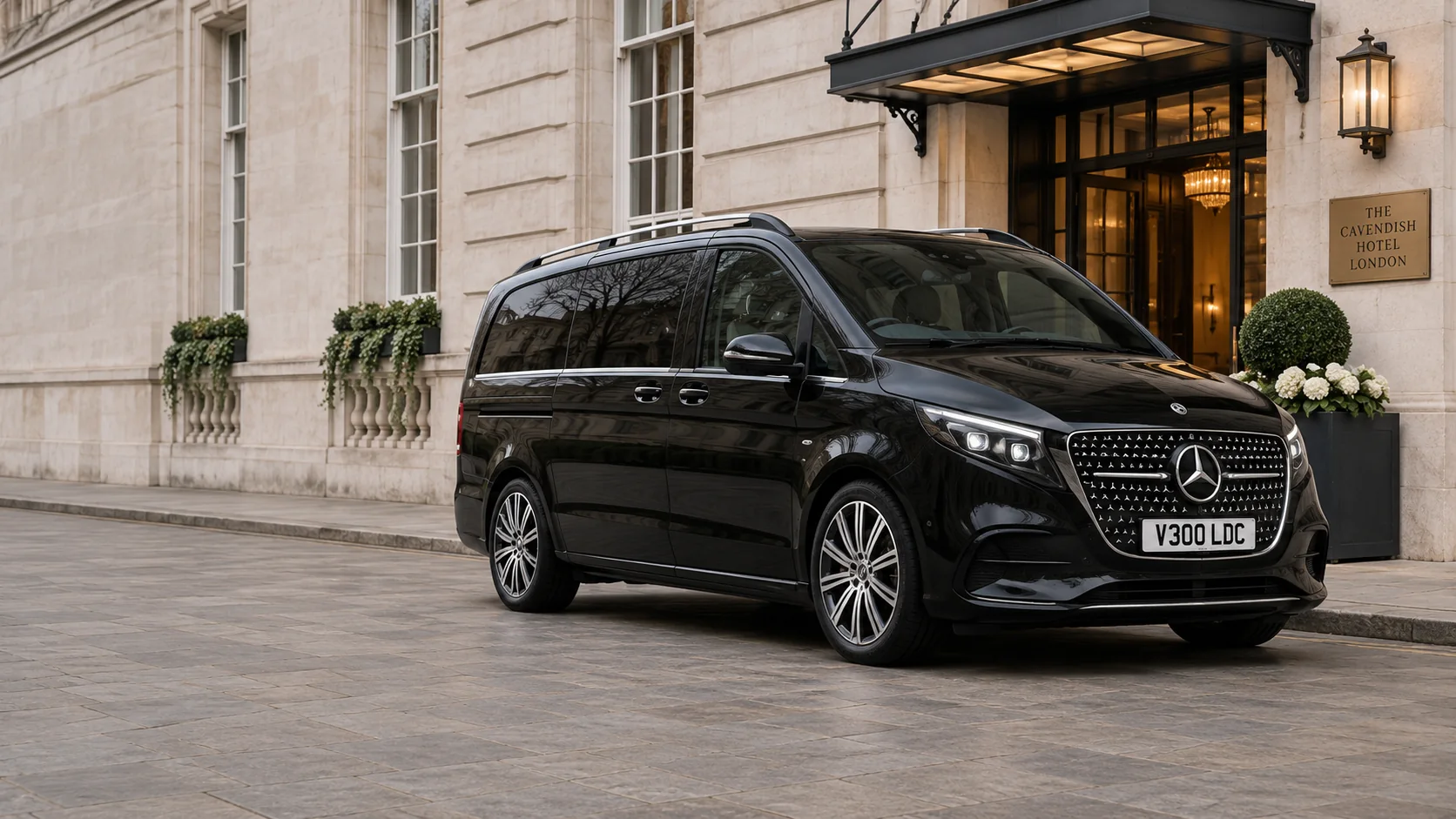
Six people heading to one hotel should start with a Mercedes V-Class. Two people with a suitcase each may only need an E-Class. This chauffeur car comparison covers the S-Class rear cabin, the Range Rover’s higher seat and all four fares on one Heathrow route.
The E-Class, S-Class and Range Rover each take up to three passengers, two suitcases and two pieces of hand luggage. London Direct Chauffeurs lists up to seven passengers, five suitcases and five pieces of hand luggage for its V-Class. Ask the operator to check your full load against the seating layout.
London Direct Chauffeurs’ one-way starting fares per vehicle from Heathrow to Central London, including VAT.
Vehicle
Passengers, up to
Suitcases + hand luggage
Fare from
Mercedes E-Class
3
2 + 2
£135
Mercedes S-Class
3
2 + 2
£180
Mercedes V-Class
7
5 + 5
£180
Range Rover
3
2 + 2
£280
Travelling with a pushchair or a rigid equipment case? Send its measurements with your bag count. Check which car fits your luggage.
E-Class, S-Class or Range Rover for a smaller party?
For a direct trip from Heathrow to the office, the Mercedes E-Class has the lowest starting fare of the four. London Direct Chauffeurs lists phone charging and bottled water for the E-Class. Ask for Wi-Fi when booking if you need it for the journey.
Choose the Mercedes S-Class if your guests would value more room in the back. Its Heathrow starting fare is £45 above the E-Class, with the same listed passenger and bag limits.
The Range Rover suits a guest who prefers a higher seat. If stepping into the car is a concern, ask for the door opening and step height of the vehicle the operator can supply. The guide to a shorter walk at pickup can help with the distance from the entrance to the car.
Two clients arriving together
Imagine two clients landing with one suitcase each. An E-Class covers the hotel drop-off if their cases fit. If both want more rear space between meetings, ask what it costs to keep an S-Class for the afternoon.
The centre armrest is down in this cabin. If three guests want to sit across the back, ask how the allocated car is arranged.
When does a Mercedes V-Class make more sense?
Start with the Mercedes V-Class for four or more people who want to travel together. The operator can confirm the space left for cases once it knows how many seats you need. For a group that wants to talk face to face, request conference-style seating before booking.
A family with a pushchair
Suppose two adults and two children arrive with three large cases, two cabin bags and a folding pushchair. Give the operator the pushchair’s folded length, width and height. Include the children’s ages and the child seats you need.
If two grandparents join the return trip, count their cases too. Ask for prices for one V-Class and two cars if the full load is a tight fit. The six-passenger luggage guide helps you brief the return leg.
How much does a Heathrow transfer cost?
The S-Class and V-Class both start at £180 from Heathrow to Central London. Two guests can choose a rear cabin they like at that starting fare. Six guests who want one car should ask for the V-Class with their bags listed.
In the Heathrow-to-Mayfair fare example supplied for this guide, the price included VAT, parking and the congestion charge. For your own quote, give the drop-off postcode and ask which charges the total covers. Add your flight number and agree a meeting point using the Heathrow pickup guide.
If the car must wait during a meeting, tell the operator how long you expect to be inside. Use hourly hire or two transfers to compare keeping the car with booking a second pickup.
What should you put on the booking form?
Copy the six fields below into your journey notes. Fill them in for the busiest leg and add another line if the return party changes.
Journey and stops (date, UK time, pickup, drop-off, extra stops and return)
Passengers on the busiest leg (adults, children and anyone joining later)
Cases and hand luggage (number of each, with sizes)
Bulky items (folded dimensions, including wheels or handles)
Seating and access (child seats, who needs to sit together, entry or walking needs)
Confirmation requested (vehicle, luggage fit, final fare and included charges)
Chauffeur car questions
What is the difference between an E-Class and an S-Class for a chauffeur booking?
The E-Class is the lower-priced option for a straightforward transfer. The S-Class offers more room for rear passengers, and both cars have the same passenger and bag limits on the operator’s booking form. Ask who will use the rear seats and how long they will spend there before choosing.
Can seven people and their luggage fit in a V-Class?
The booking form lists up to seven passengers, five suitcases and five pieces of hand luggage for a V-Class. Send London Direct Chauffeurs the actual case sizes, any folded pushchair and the number of child seats. Ask the operator to confirm that combination for the vehicle it will supply.
Should I choose a Range Rover for four passengers?
Start with the V-Class if four people want to ride together. London Direct Chauffeurs lists the Range Rover for up to three passengers. If someone prefers the higher SUV seat, ask about a second car and say which passengers and bags will travel in each.
Can I request a child seat or a particular seat layout?
You can request child seats by giving the children’s ages and saying which adult needs to sit beside each child. For a group briefing, ask whether the V-Class can have facing seats. London Direct Chauffeurs will check availability and confirm the seating arrangements with you before you book.
Are the Heathrow fares per person or per car?
London Direct Chauffeurs publishes a starting fare per car for a one-way Heathrow-to-Central-London transfer, including VAT. To compare quotes, enter the hotel or drop-off postcode, planned stops and any time the car must wait. Give separate times and addresses if you also need a return journey.
What should I send for a golf bag or pushchair?
Count each item and measure its length, width and height as it will travel. Include wheels or handles in the measurements and say whether the item folds. Send the details alongside your passenger count and ordinary cases so the operator can check the full load together.
Start your chauffeur car comparison with the largest party and everything it brings. Once the load fits, choose the cabin the passengers will enjoy. Send your itinerary to London Direct Chauffeurs to confirm the vehicle, fare and collection details.
An excellent London hotel can have a ballroom door, a restaurant entrance and a vehicle forecourt on different streets. The address printed on the stationery may take a guest to the wrong one.
Ask which entrance a pre-booked chauffeur should use for your particular guest, on that date and at that time. A formal event or coach arrival can change the normal arrangement. Ask for the street name or postcode, then copy it into the chauffeur booking.
Work through the luggage handover
A passenger checking out after breakfast may leave bags with the porter until the afternoon. Agree who holds the luggage ticket and where the cases will be collected. A car arriving for a restaurant guest is a different movement from a car carrying a family and stored bags.
Separate the collection from the social plans
Friends may meet in one lobby and leave from another venue. After dinner, guests often use the nearest exit without noticing the street. Put the written return point in the group chat before the evening begins so that everyone follows the same instruction.
A worked example
For a large Mayfair property, “the concierge-confirmed side entrance on the booking, 14:00, two checked cases with the porter” is a much stronger brief than “collect at the hotel at two”.
The decision usually turns on what you need the car to do while you are inside. A four-hour lunch, a string of ten-minute stops and a dinner with an uncertain finish are three different briefs.
Write down the first pickup, each venue and the final drop. Next to each stop, note whether the finish is fixed or flexible. If nothing happens between a morning drop and an evening return, ask for two point-to-point prices. A changing afternoon with bags in the car makes retained hire worth comparing.
Compare the same period and vehicle
Ask both quotes to include the same car and addresses. For hourly hire, confirm the minimum period, how the clock starts and ends, and what happens if you extend. For the two-transfer option, confirm waiting at each collection. Neither headline figure is meaningful unless the two offers describe the same task.
Give the chauffeur a way back to you
A retained car may need to wait away from a busy entrance. Agree how much notice to give before walking out, and who will call. For a pair of transfers, the return booking needs its own confirmed time, entrance and mobile contact.
Compare each option against the same itinerary.
Question
Hourly hire
Two transfers
Finish moves?
Agree the hire window and overtime.
Agree each collection and waiting terms.
Several stops?
List the route and approximate durations.
Request a quote for each booked movement.
Bags stay with you?
Confirm the vehicle stays with the party.
Plan where luggage goes between trips.
A worked example
Four hours at the published £75 S-Class hourly rate gives a £300 base comparison for a London booking. A pair of transfers needs its own route-specific quote. Add any agreed extras to both sides before deciding.
A group of twenty needs a loading plan as much as it needs vehicles. The guest list, the seats on each leg and the return meeting arrangement should all be settled before everyone gathers in a hotel lobby.
Nominate a lead passenger for each car and share a simple group list. If using four V-Class vehicles, five guests per car is a straightforward starting arrangement, subject to the confirmed configuration. Check whether guests will carry bags or hospitality items that need space.
Work from the hospitality invitation
An advertised kick-off time may be much later than the hospitality arrival. Record the stadium, stand, ticket entrance and required host check-in. Give the office the exact hotel lobby and agree how the cars can load without blocking the entrance.
Plan for a mixed finish
Some guests may leave at full time while others stay in the suite. Decide whether all cars wait for the last guest or leave in waves. Put the return landmark and each lead passenger’s contact in the group message before the match. Venue or police traffic arrangements determine where cars can collect.
A worked example
If two of the twenty guests make their own return journey, revise the lists before departure. The chauffeur teams can then account for eighteen expected passengers instead of waiting outside for two who have left.
One-way, return or a chauffeur for the whole weekend?
A weekend outside London can call for one transfer, a pair of transfers or a chauffeur retained through local movements. Describe the movements first and compare the three on what you will actually use.
If everyone stays at one hotel and the property hosts the entire programme, a Friday arrival and Sunday departure can be priced independently. Give each leg its own time, passenger list and luggage count. Sunday may involve a new guest or a completely different final address.
When a retained car makes sense
A dinner at another estate, an early shoot, a village lunch or several guest collections can make local availability valuable. Send the addresses, essential times and periods when no driving is needed. Ask how duty arrangements, overnight costs and route changes appear in the quotation.
Choose a fair basis for comparison
Use the same vehicle class and the same full itinerary for every option. Check whether a countryside destination changes the quoted mileage or hours. The lowest first transfer is not a reliable measure of a weekend with several additional movements.
A worked example
For a Friday London departure, a Saturday wedding at another property and a Sunday Heathrow flight, request three movement prices and one itinerary price. The flight provides the fixed end point against which to compare both plans.
A bag that is light enough to lift can still be too long to load beside passengers. Golf equipment, instruments and framed artworks need measurements, handling instructions and a confirmed vehicle layout.
Use the outside length, width and height with the handle, wheels and protective shell included. Say whether the case must remain upright or may lie flat. The dimensions of an instrument or a golf club alone tell the reservations team little about the packed item.
Count the rest of the party
Add passengers, ordinary luggage and equipment at the busiest point on the route. An empty area visible in an MPV photograph may be occupied by a passenger seat in the booked configuration. Keep passenger restraint areas and exits clear in the confirmed arrangement.
Describe the handover
A concert hall loading entrance and an artist entrance can be different addresses. Tell the office who will receive the item and whether a passenger will remain with it. For valuables or specialist movements, ask the operator which service it can confirm.
A worked example
For two musicians and three rigid cases, send each case dimension and the venue loading contact. A photo of the packed cases beside a tape measure can clarify an unusual shape when the office requests it.
Oxford or Cambridge for a private day from London?
Both cities work well when the car takes care of the distance and the visit unfolds on foot. Choose between them by what the party wants to do once it gets out of the car.
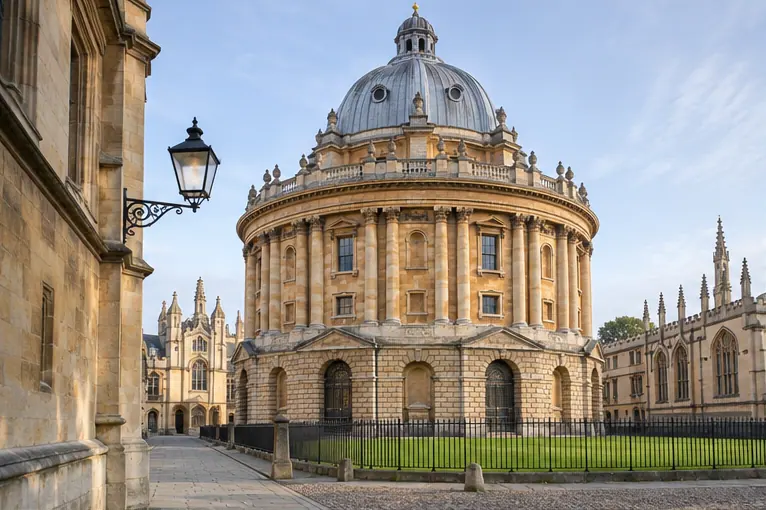
A walk around Radcliffe Square and the college streets can anchor the day. Add one indoor visit and reserve time for lunch. If a particular college matters, check its visitor arrangements directly. The city’s architecture can be enjoyed without treating every doorway as an admission stop.
Choose Cambridge for a river-led visit
A punt or a walk beside the Backs gives a Cambridge day a different rhythm. If you book a punt, use the operator’s actual meeting place. Arrange a collection on the side of the centre where the visit ends, especially if the party does not want to retrace its steps.
Make time for one proper visit
Combining both cities changes the trip into a longer driving itinerary. Before asking for both, name the one experience nobody wants to miss and the time the party needs to be back in London. Give the chauffeur team those two anchors before adding more geography.
A worked example
For guests with a confirmed college appointment, choose that city and build the rest of the day around the visit. For guests who simply want a scenic afternoon, decide between a riverside outing and a college-quarter walk.
What to give the chauffeur before a private flight lands
A ground transfer can be arranged while the final arrival time is still moving. The most useful information comes from the people who know the aircraft, the handler and when passengers will actually be released.
Send the airport, handler or FBO, aircraft registration or flight reference, local date and latest estimated arrival. Add a PPR reference if the airport or operator requests it. Avoid relying on an airport name when several passenger facilities share the airfield.
One person for operational changes
A dispatcher, handler or flight assistant may know more about the latest slot than the lead passenger. Give the chauffeur team a working operations contact and agree how ETA changes will be passed on. Confirm which details may be shared with the passenger and which belong only with operations.
One plan for each onward movement
Principals, guests, baggage and crew do not always leave at the same time. For each vehicle, record a destination, lead contact and passenger-ready estimate. Treat aircraft-side access as a separate permission controlled by the airport and handler. The written collection instructions should work landside too.
A worked example
Two principals going to a Knightsbridge hotel and three crew going to an airport hotel are separate movements even if everyone arrived on the same jet. The crew may remain at the aircraft after the passengers have left.
A roadshow running order a chauffeur can actually use
A calendar invitation is designed for a meeting attendee. A chauffeur also needs to know where the car can stop, when the passenger must be inside and who can change the next movement.
For each visit, write down the arrival deadline, usable entrance, expected finish and on-site contact. Add reception or security time before the meeting. If the office sends a postcode for a whole development, ask for the building and guest entrance.
Identify the meeting that cannot move
A late first appointment can affect an entire afternoon. Mark which visits are anchored by a train, a speaker call or a visiting principal’s departure. Identify a coffee break or shorter visit that can absorb a change. Share the decision with the travelling assistant.
Keep one current version
A driver working from a text message and an assistant working from an old PDF can easily head for different streets. Put a revision time against the running order and send changes through one coordinator. For two cars, label the passenger group as clearly as the vehicle.
A worked example
A running-order entry might read “10:40 at reception, building name and visitor entrance, board meeting at 11:00, expected release 11:50, changes via the travelling assistant”. The chauffeur can use every part of that line.
How to arrange a chauffeur pickup with less walking
“Close to the entrance” means different things at a hotel, airport and stadium. A better brief describes the distance a passenger is comfortable walking and the kind of boarding arrangement they need.
Tell the office whether the passenger can transfer into a standard seat and whether a walking aid or folded chair travels with them. Provide its folded dimensions when relevant. If the passenger must remain in a wheelchair, request a vehicle explicitly equipped and confirmed for that journey.
Connect the operator and venue arrangements
A venue may have a designated accessible drop or a separate assistance point. Obtain its directions and discuss how the handover will work with the chauffeur. For rail and airport assistance, arrange that service directly with the relevant operator and record the meeting time.
Check the return separately
Crowd controls or evening gate closures can make the return different from the arrival. Give the lead passenger and the venue two matching sets of directions. Request a backup meeting plan that does not require the guest to walk between several possible exits.
A worked example
A guest may be comfortable walking a short distance on level ground but find a high vehicle step difficult. Stating those two requirements lets the office discuss a suitable confirmed vehicle and meeting point.
Six passengers, one V-Class and the luggage question
“Six passengers” tells the office how many people need a seat. It does not tell them whether the same vehicle can carry a week of cruise luggage, a folding pushchair and six personal bags.
A rigid instrument case, a large pushchair or a sports bag often determines the packing arrangement. Give its dimensions and whether it folds. Then list full-size suitcases, medium cases, cabin bags and backpacks separately. People use the words large and carry-on differently, particularly across airlines.
Check the busiest part of the journey
If two people join the group at a hotel, count the passengers and bags after that pickup. A return can also be different: shopping, a second pushchair or luggage stored at reception can change the load. Tell reservations whether child seats are requested and who is supplying them.
Get a configuration confirmed
London Direct Chauffeurs offers a V-Class for up to seven passengers, depending on the configuration. Ask the team to confirm the exact load together. If there is doubt, compare two vehicles with one larger agreed arrangement rather than leaving the decision to the collection point.
A worked example
A useful enquiry could read, “Three adults, children aged 12, 9 and 7, one large case, two medium cases, one cabin bag and four backpacks. We may add one more medium case. Please quote the vehicle arrangement with that extra case included.”
How to plan a Southampton to London sightseeing transfer
A sightseeing transfer after a cruise can make a travel day worthwhile. It works when the attraction, the luggage and the final London commitment all fit one realistic itinerary.
Get the ship name, confirmed terminal and expected passenger walk-off time. The ship may be alongside well before your luggage is available. If the cruise line assigns a departure group, use that time as the starting estimate and tell the chauffeur team about changes.
Choose the stop with the least flexibility
For Stonehenge, check the current visitor arrangements and admission window with English Heritage. For Salisbury Cathedral, check visitor access on the day. A fixed admission or a service schedule can determine the order. Avoid buying several tight tickets before the vehicle route has been reviewed.
Protect the last journey
Name the London hotel entrance and the latest comfortable check-in or dinner time. If the ship is delayed, agree which stop drops out first. Keep the full bag inventory in the quotation even though everyone will be out of the vehicle at the attractions.
A worked example
A family of six with cruise luggage might request Stonehenge as the priority, Salisbury as the flexible stop and a London hotel as the final address. That gives the operator a clear decision if the morning contracts.